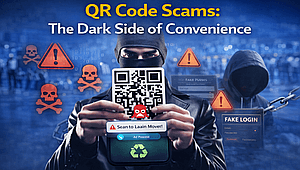
QR codes have become part of our daily lives. We scan them to pay bills, view restaurant menus, download apps, and access websites instantly. They are fast, simple, and contactless.
But with convenience comes risk.
QR code scams are rising worldwide. Cybercriminals are using fake QR codes to steal money, data, and personal information. In this article, we will explain how QR code scams work, common types of fraud, and how you can stay safe.
What Is a QR Code Scam?
A QR code scam happens when a fraudster creates a malicious QR code that redirects users to:
- Fake payment pages
- Phishing websites
- Malware downloads
- Fraudulent login portals
When users scan these codes, they may unknowingly share sensitive details like passwords, OTPs, or banking information.
This type of fraud is often called “Quishing” (QR Phishing).
Why QR Code Scams Are Increasing
QR codes are popular because:
- People trust them
- They are hard to read visually
- Users scan without thinking twice
- Payments via QR are common
Since you cannot see the URL before scanning, attackers take advantage of this blind trust.
Common Types of QR Code Scams
1. Fake Payment QR Codes
Scammers paste fake QR stickers over original codes in:
- Parking areas
- Restaurants
- Public places
- Utility bill counters
Money goes directly to the scammer’s account.
2. Phishing QR Codes
You may receive a QR code via:
- Email
- SMS
- Social media
- Posters
After scanning, you land on a fake website that looks real. Once you enter login details, scammers steal your credentials.
3. QR Code on Delivery Packages
Fraudsters send packages with QR codes claiming:
- “Scan to confirm delivery”
- “Scan to reschedule”
- “Scan for refund”
These redirect to malicious sites.
4. Fake Job or Offer QR Codes
Posters advertising:
- Easy jobs
- Big discounts
- Lucky draws
The QR code leads to data collection forms that steal your personal information.
Warning Signs of a QR Code Scam
Be alert if:
- The QR code is pasted over another code
- The URL looks strange or misspelled
- The website asks for OTP or bank details
- The offer sounds too good to be true
- The source is unknown
Always verify before entering sensitive information.
How to Protect Yourself from QR Code Scams
✅ Check the Source
Scan only QR codes from trusted businesses.
✅ Preview the URL
Most smartphones show the website link before opening. Verify it carefully.
✅ Avoid Sharing OTP
No legitimate company asks for OTP via QR scan.
✅ Use Secure Payment Apps
Always double-check the receiver’s name before confirming payment.
✅ Install Security Software
Mobile security apps can detect malicious links.
How Businesses Can Prevent QR Code Misuse
Legitimate businesses must protect customers by:
- Using dynamic and secure QR codes
- Adding brand logos inside QR codes
- Monitoring QR performance
- Avoiding public tampering
At QR Code Creator IO, we focus on secure, trackable, and customizable QR solutions that reduce the risk of fraud. Our platform helps businesses create trusted QR codes with built-in safety features and analytics.
The Future of QR Security
As QR code usage grows, security awareness must grow too. Governments and financial institutions are already issuing warnings about QR-related fraud.
Education is the best protection.
Scan smart. Think before you click. Verify before you pay.
Final Thoughts
QR codes are powerful tools. They simplify payments, marketing, and digital access. But like any technology, they can be misused.
By staying alert and using trusted platforms like QR Code Creator IO, both individuals and businesses can enjoy the benefits of QR codes without falling victim to scams.
Stay safe. Stay smart. Scan responsibly.